Understanding Anxiety & How Therapy can help you
Anxiety therapy in Dorchester

Because knowing we are safe and feeling safe are not always the same thing.

Recognising Anxiety
Do you frequently find yourself overthinking conversations? Do you replay past events in your mind? Do you live with a constant underlying feeling of worry? Do you analyse every possible outcome of a future event? Do you start tasks and never finish them? Do you feel constantly on edge even when there is no obvious reason?
Is this you?
Anxiety comes in many forms and a small amount, in the right situation can be very useful. However when anxiety becomes persistent, overwhelming and is interfering with everyday life, then it is no longer serving a purpose.
If these feelings are making simple tasks, activities and decisions making challenging for you, then it’s time to take action and take back your control.
What is anxiety?
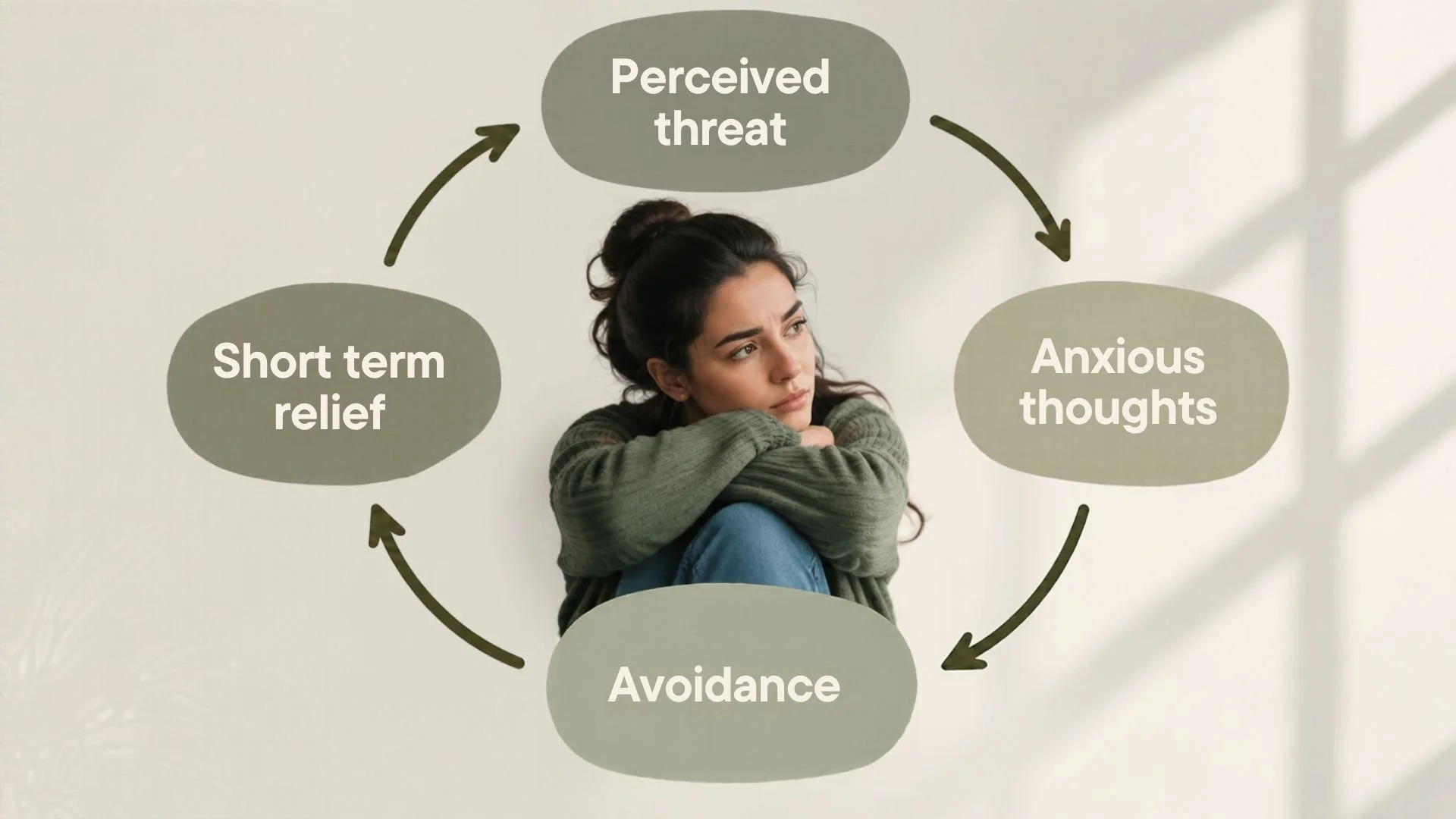
Anxiety is a natural response to stress. It is a survival response designed to protect us from danger. When we perceive danger, our sympathetic nervous system is activated which then triggers a response of hyperactivity - the fight or flight or freeze response. The body then prepares itself - our heart rate increases, muscles tense, there is a release of adrenaline, digestion slows and we feel a sense of heightened alertness.
This is great news! — If you find yourself head to head with a grizzly bear.
Luckily this is an unlikely situation for the majority of us. So why, for some us, does being asked to present in a meeting, for example, feel as if we were head to head with a grizzly bear?
Well, the reason for this is, our incredible, highly sophisticated brains, a times, cannot distinguish between real danger and perceived danger. And so our reactions become overtly stronger than necessary.
Why can we not see clear in times of stress, anxiety & overwhelm?
The brain’s threat detection system is deeply rooted in our evolutionary history. It can activate before the parts of the brain responsible for conscious reasoning have fully assessed the situation. A little like touching a hot pan. This is why we can experience intense feelings of worry and anxiety even when we rationally understand that we are safe.

How can anxiety affect everyday life?

Thoughts & emotions
Overthinking, doubting your choices, imagining worst case scenario, irritability, feeling overwhelmed, struggling with uncertainty. 
Physical sensations
Racing heart, muscle tensions, overstimulated, sleeping issues, headaches, trembling, nausea, stomach irritation 
Avoiding situations, withdrawing socially, seeking constant reassurance, procrastinating and putting off important tasksBehaviour & relationships